
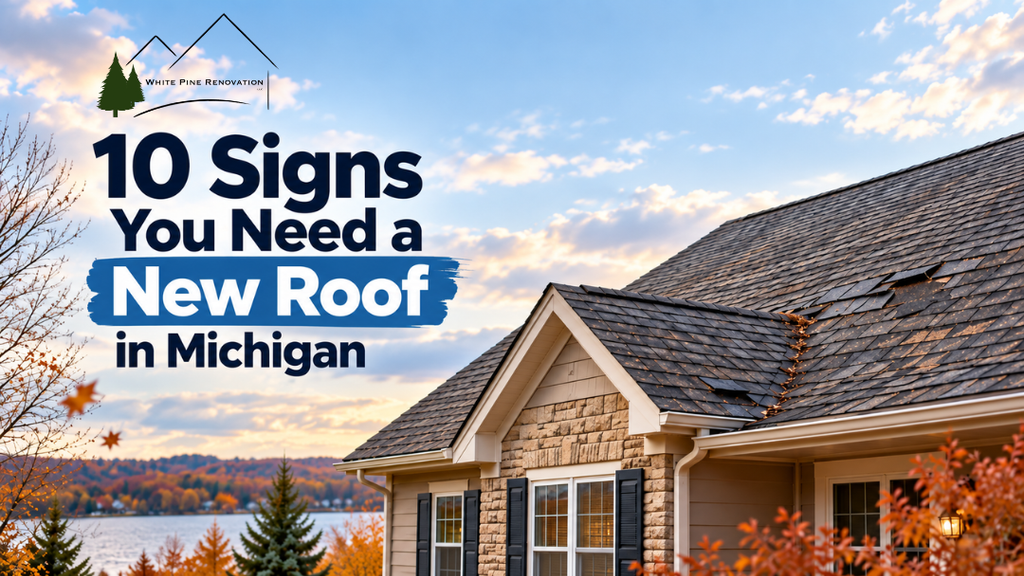
Knowing the signs you need a new roof can help you catch problems before they lead to leaks, water damage, or more expensive repairs.
Michigan roofs deal with rain, wind, snow, ice, and constant temperature changes throughout the year.
But even a well-installed roof will eventually reach the end of its useful life.
The difficult part is knowing when a roofing problem can be repaired and when the roof has deteriorated enough that replacement makes more sense.
Some signs are easy to spot, like missing shingles or an active leak.
Others, such as granule loss, damaged roof decking, worn flashing, or moisture in the attic, can be harder to notice from the ground.
If you are unsure about the condition of your roof, these 10 warning signs can help you decide when it may be time to schedule a professional roof inspection.
1. Your Asphalt Shingle Roof Is 20 Years Old or Older
Roof age is one of the first things to consider when deciding whether you may need a roof replacement.
Asphalt shingles do not have one exact lifespan.
How long they last depends on the type of shingle, installation quality, ventilation, sun exposure, maintenance, and weather conditions.
As a general guideline, many asphalt shingle roofs last around 20 to 25 years.
GAF also recommends considering replacement when a roof is more than 20 years old, especially if it has extensive damage or recurring problems.
That does not mean your roof automatically needs to be replaced the day it turns 20.
A properly installed and well-maintained roof may still have years of useful life left.
Instead, think of 20 years as a good time to start watching your roof more closely.
If your roof is approaching or past that age, consider having it inspected for:
- Shingle deterioration
- Granule loss
- Damaged flashing
- Previous repairs
- Moisture intrusion
- Roof deck deterioration
- Ventilation problems
Knowing when your roof was installed can also help you plan ahead instead of waiting for a major leak to force an emergency decision.
2. Your Roof Has Missing, Cracked, or Curling Shingles
Damaged shingles are one of the easiest signs of roof deterioration to spot.
From the ground, look for shingles that appear:
- Missing
- Cracked
- Curling at the edges
- Buckled
- Torn
- Loose
- Lifted
As shingles age, they can become brittle and lose their ability to shed water properly.
GAF lists missing, curling, cracking, buckling, and torn shingles as common warning signs that a roof may need attention.
A few damaged shingles do not always mean you need a complete roof replacement.
For example, a relatively young roof might lose a few shingles during a windstorm while the rest of the roofing system remains in good condition.
In that case, a targeted repair may be enough.
It becomes more concerning when damaged shingles appear across several areas of the roof.
If deterioration is widespread, replacing individual shingles may only provide a temporary solution.
3. You Notice Excessive Shingle Granules in Your Gutters
Asphalt shingles are covered with small mineral granules.
These granules help protect the asphalt underneath from sunlight and weather exposure.
Some granule loss is normal, especially on a newly installed roof.
Manufacturers often apply extra loose granules during production, so you may see some collecting in the gutters during the first several months.
Granule loss becomes more concerning when an older roof starts shedding large amounts.
You may notice:
- Granules collecting in your gutters
- Granules near downspout outlets
- Dark or bare spots on shingles
- Uneven coloring across the roof
Aging, storms, hail, foot traffic, and normal weather exposure can all contribute to granule loss.
If an older roof is losing a large amount of granules or developing visible bald spots, it is worth scheduling an inspection.
The shingles may be reaching a more advanced stage of wear.
4. Your Roof Has Bald Spots or Widespread Shingle Damage
One damaged shingle is very different from an entire section of deteriorating shingles.
When damage appears across large areas of the roof, repairs become less practical.
Fixing one location does not solve problems developing in the surrounding shingles.
Look for areas where shingles have:
- Lost significant granule coverage
- Cracked across multiple sections
- Started curling
- Become brittle
- Lifted or loosened
- Developed visible bald spots
Widespread deterioration is especially important on an older roof.
If several roof slopes show similar damage, a contractor should evaluate the entire roofing system instead of focusing only on the most obvious problem.
5. You Have Recurring Roof Leaks or Water Stains
One roof leak does not always mean you need a new roof.
Leaks can come from isolated problems such as damaged shingles, worn flashing, roof penetrations, or storm damage.
Recurring leaks are more concerning.
If leaks keep returning after repairs, or water is showing up in several parts of your home, the problem may involve a larger section of the roofing system.
Common signs of a roof leak include:
- Brown or yellow ceiling stains
- Water marks on walls
- Damp attic insulation
- Moisture on roof decking
- Peeling paint
- Musty odors
- Water dripping during rain
Flashing around chimneys, skylights, vents, and other roof penetrations can also become a problem as it ages.
Damaged flashing can allow water into the roofing system even when nearby shingles still look fine.
Do not wait until water is dripping from your ceiling before investigating.
The U.S. Department of Energy notes that attic moisture can damage roofing materials and insulation.
Roof leaks, damaged flashing, and ice dams can all allow moisture into the attic.
If your roof keeps developing leaks, a professional inspection can help determine whether another repair makes sense or whether replacement would be the better long-term option.
6. Your Roof Deck Is Sagging or Showing Structural Damage
Your roofline should generally look straight and even.
If part of the roof appears to dip, sag, or bow, it should be inspected as soon as possible.
A sagging area may point to damaged roof decking, moisture deterioration, framing problems, or another issue below the shingles.
GAF lists a sagging roofline or roof deck as a warning sign homeowners should have evaluated.
Other possible signs include:
- Soft or deteriorated roof decking
- Uneven sections along the roofline
- Moisture-damaged wood in the attic
- Cracked structural components
- Sections of the roof that visibly dip
Do not try to diagnose a sagging roof by walking on it yourself.
Have a qualified professional inspect both the roof surface and the structure underneath.
7. Moss or Algae Is Spreading Across Your Roof
Moss and algae are not the same thing, and they do not always indicate the same level of concern.
Dark streaks caused by blue-green algae are often mostly cosmetic.
Owens Corning notes that algae discoloration does not necessarily affect shingle performance.
Moss can be more problematic.
It tends to grow in damp, shaded areas and can hold moisture against the roof surface.
As moss spreads, it can grow around shingles and may contribute to lifting, granule loss, and moisture-related damage.
That does not mean every roof with moss needs replacement.
A roof that is otherwise in good condition may simply need professional cleaning and maintenance.
However, heavy moss growth should be taken more seriously when it appears along with:
- Curling shingles
- Significant granule loss
- Leaks
- Soft roof decking
- Missing shingles
- Advanced roof age
Avoid pressure washing asphalt shingles.
High-pressure cleaning can remove protective granules and damage the roofing surface.
8. You Keep Paying for Roof Repairs
Roof repairs make sense when the damage is isolated and most of the roofing system is still in good condition.
But repeated repairs can eventually become a sign of a larger problem.
Think about how often you have had to repair your roof during the last few years.
Have you fixed one leak only to find another?
Are shingles repeatedly coming loose?
Has flashing been repaired several times?
Are new problems appearing on different parts of the roof?
When an older roof keeps developing problems in multiple areas, repairs may only delay the need for replacement.
A professional inspection can help you compare the cost of another repair with the condition and expected remaining life of the roof.
9. Michigan Storms, Snow, or Ice Dams Have Damaged Your Roof
Michigan weather can be tough on residential roofing.
Strong winds can lift or remove shingles.
Hail can damage shingles and cause granule loss, dents, cracks, and other surface damage.
IBHS laboratory testing specifically evaluates asphalt shingles for hail-related deformation, granule loss, tears, cracks, and ruptures.
Winter also creates another common problem: ice dams.
The National Weather Service explains that ice dams can form when snow melts on a warmer part of the roof and then freezes again near the colder eaves.
As this process repeats, water can collect behind the ice and work its way beneath the shingles.
The Department of Energy also notes that water backed up by an ice dam can get underneath roofing materials and contribute to moisture and structural damage.
After a major Michigan storm, look for:
- Missing shingles
- Lifted shingles
- Tree or debris impact
- Dented gutters
- Damaged flashing
- Excessive granules near downspouts
- Interior water stains
- Wet attic insulation
- New leaks
Storm damage does not automatically mean you need a full roof replacement.
The age of the roof, extent of the damage, and condition of the surrounding shingles all need to be considered.
10. Your Roof Is Showing Multiple Signs of Deterioration
One warning sign may only mean your roof needs a repair.
Several warning signs appearing at the same time are more concerning.
For example, consider a 22-year-old asphalt roof with curling shingles, recurring leaks, granules filling the gutters, and several previous repairs.
Any one of those problems could be evaluated individually.
Together, they suggest that the roofing system as a whole may be nearing the end of its useful life.
Common combinations include:
- Old roof + curling shingles
- Old roof + recurring leaks
- Granule loss + bald shingles
- Moss + lifted shingles
- Storm damage + aging shingles
- Missing shingles + multiple previous repairs
- Leaks + damaged roof decking
The goal is not to replace a roof just because you notice one small problem.
Instead, look at the overall condition of the roof and whether the damage is isolated or happening across the entire system.
Roof Repair vs. Roof Replacement: How to Know Which You Need
The decision between roof repair and roof replacement usually depends on three things: the extent of the damage, the condition of the surrounding roofing materials, and the age of the roof.
Roof repair may make sense when:
- The roof is relatively young
- Damage is limited to a small area
- Only a few shingles are missing
- One flashing location is leaking
- The surrounding shingles are still in good condition
- Storm damage is isolated
Roof replacement may deserve consideration when:
- The roof is around 20 years old or older
- Shingle deterioration is widespread
- Leaks keep returning
- Several areas have already been repaired
- Large portions of the roof have lost granules
- Roof decking has moisture damage
- Several warning signs are appearing at the same time
The main difference is isolated damage versus widespread deterioration.
A repair fixes a specific problem.
A roof replacement addresses a roofing system that is deteriorating across a larger area or reaching the later stages of its service life.
If you are unsure which situation applies to your roof, start with an inspection instead of assuming replacement is necessary.
How Long Does a Roof Last in Michigan?
For asphalt shingles, a general planning range is about 20 to 25 years.
Some roofs need replacement sooner, while others may continue performing well beyond that range.
Actual roof lifespan depends on factors such as:
- Shingle type and quality
- Installation quality
- Roof ventilation
- Attic insulation
- Sun exposure
- Roof slope
- Tree coverage
- Maintenance
- Storm exposure
- Moisture
- Snow and ice
- Previous repairs
Because there are so many variables, roof age should never be the only reason for replacement.
A poorly ventilated 17-year-old roof with recurring leaks may need attention sooner than a well-maintained roof that is several years older.
The best way to estimate remaining roof life is to consider both its age and its physical condition.
How Michigan Weather Shortens the Lifespan of Your Roof
Michigan homeowners deal with hot summers, freezing winters, heavy snow, wind, ice, and rain.
Over time, these conditions can expose weaknesses in an aging roofing system.
Freeze-Thaw Cycles Can Crack and Damage Shingles
Freeze-thaw conditions can create problems when moisture reaches vulnerable parts of the roof.
Water can enter small openings around damaged roofing materials and freeze as temperatures drop.
Repeated freezing and thawing can place additional stress on shingles and other roofing components.
These conditions can also contribute to ice dam formation around roof eaves.
Proper installation, flashing, attic air sealing, insulation, and ventilation can all help reduce moisture problems during winter.
Heavy Snow and High Winds Put Stress on Roofing Systems
Snow and ice add weight to a roof.
Strong Michigan winds can also lift shingles and expose weak areas in older roofing materials.
As shingles age, they may become less flexible and more vulnerable to storm damage.
After a major storm, check your roof from the ground for obvious changes.
Look for missing shingles, fallen branches, damaged gutters, or other visible problems.
If something looks different, schedule a professional inspection instead of climbing onto the roof yourself.
Ice Dams Can Cause Roof Leaks and Water Damage
Ice dams form when heat causes snow higher on the roof to melt.
The water runs toward the colder edge of the roof, where it freezes again and creates a ridge of ice.
More melting snow can then collect behind that ridge.
If the water moves beneath the shingles, it may reach the roof deck, attic, or living space.
Proper attic insulation, air sealing, and ventilation can help reduce the conditions that contribute to ice dams.
If your home develops large ice dams every winter, consider having both the roof and attic evaluated.
When Is the Best Time to Inspect Your Roof in Michigan?
Spring is a good time to inspect a Michigan roof because winter weather may have exposed problems that were not obvious before.
Once the snow and ice are gone, you may notice:
- Missing shingles
- Damaged gutters
- Loose flashing
- Interior water stains
- Granules near downspouts
- Moss growth
- Damage from fallen branches
Fall is another useful time for a roof inspection.
It gives you a chance to address problems before snow and freezing temperatures return.
The National Roofing Contractors Association recommends inspecting residential roofing systems at least twice a year, preferably in the spring and fall.
Additional inspections are also recommended after severe weather.
For Michigan homeowners, a practical schedule is:
Spring: Check for damage from winter snow, ice, and temperature changes.
Fall: Make sure the roof is ready before winter returns.
After severe storms: Look for wind, hail, debris, or water damage.
You can perform a basic visual inspection from the ground.
A professional inspection will provide a much closer look at the entire roofing system.
What Does a Professional Roof Inspection Include?
A roof inspection should look at more than whether shingles are missing.
Your roof works as a complete system that includes shingles, flashing, decking, ventilation, underlayment, drainage, and roof penetrations.
Roof Shingle and Granule Inspection
The inspector should examine the shingles for:
- Curling
- Cracking
- Missing shingles
- Lifted shingles
- Bald areas
- Granule loss
- Storm damage
- Uneven deterioration
These signs can help determine whether the problem is isolated or affecting a larger portion of the roof.
Roof Flashing and Leak Inspection
Flashing protects some of the most vulnerable areas of a roof.
An inspector may check flashing around:
- Chimneys
- Plumbing vents
- Skylights
- Walls
- Valleys
- Other roof penetrations
Damaged or deteriorated flashing can allow water into the roofing system even when nearby shingles still appear healthy.
Attic Ventilation and Moisture Inspection
The attic can reveal roof problems that are difficult to see from outside.
An inspection may look for:
- Moisture
- Water staining
- Wet insulation
- Condensation
- Ventilation issues
- Signs of previous leaks
The Department of Energy notes that moisture and inadequate ventilation can contribute to roof and attic durability problems.
Roof Deck and Structural Inspection
The roof deck is the structural surface underneath your roofing materials.
An inspection should check for signs of:
- Sagging
- Moisture damage
- Deteriorated sheathing
- Soft areas
- Structural movement
- Previous water intrusion
If damage is found, the inspector can determine whether it appears isolated or whether further investigation is needed.
Frequently Asked Questions About Roof Replacement in Michigan
What Are the Most Common Signs You Need a New Roof?
Common signs include widespread curling or cracked shingles, missing shingles, significant granule loss, recurring leaks, sagging roof areas, storm damage, and advanced roof age.
No single sign automatically means you need a roof replacement.
The overall condition of the roofing system matters most.
How Do I Know If My Roof Needs Repair or Replacement?
Repairs usually make more sense when the damage is isolated and the surrounding roof remains in good condition.
Replacement becomes more likely when deterioration appears across several areas of an aging roof.
Recurring leaks, repeated repairs, widespread shingle damage, and damaged roof decking can also point toward replacement.
A professional inspection can help you compare the two options.
How Long Does an Asphalt Shingle Roof Last in Michigan?
A useful planning estimate for asphalt roofing is around 20 to 25 years.
However, installation quality, ventilation, maintenance, weather exposure, material quality, and other factors can significantly affect roof life.
Age is only one part of the picture.
The physical condition of the roof matters just as much.
Can Missing Shingles Be Repaired Without Replacing the Roof?
Yes.
A small number of missing shingles on an otherwise healthy roof can often be repaired.
However, if shingles are coming loose because the entire roof has become brittle, poorly adhered, or heavily deteriorated, replacement may eventually make more sense.
Can Ice Dams Damage a Michigan Roof?
Yes.
Ice dams can trap melting snow near the edge of the roof.
That water may work beneath the shingles and enter the attic, where it can cause moisture damage.
Recurring ice dams may also be a sign that your attic insulation, air sealing, or ventilation should be checked.
Should I Replace My Roof Before Winter in Michigan?
If an inspection finds serious deterioration, active leaks, missing shingles, damaged decking, or other significant problems, addressing them before winter can help prevent the situation from getting worse.
However, you should not replace a functional roof simply because winter is approaching.
Start with an inspection and base the decision on the actual condition of the roof.
How Often Should Michigan Homeowners Have Their Roof Inspected?
The NRCA recommends roof inspections at least twice a year, preferably in the spring and fall.
It also recommends additional inspections after severe weather.
For Michigan homeowners, spring and fall are especially useful because they allow you to check the roof after winter and prepare it for the next cold season.
Schedule a Free Roof Inspection in Michigan
If your roof is showing one or more of these warning signs, you do not have to guess whether you need a repair or a full roof replacement.
A professional inspection can identify the condition of your shingles, flashing, roof deck, ventilation, and other important parts of the roofing system.
That gives you a clearer idea of what actually needs to be done.
White Pine Renovation offers free roof inspections for homeowners across our Michigan service areas.
We can inspect your roof, explain what we find, and help you understand whether repair, continued monitoring, or roof replacement makes sense for your home.
Schedule your free roof inspection today and find out whether your roof is ready for the next Michigan season.